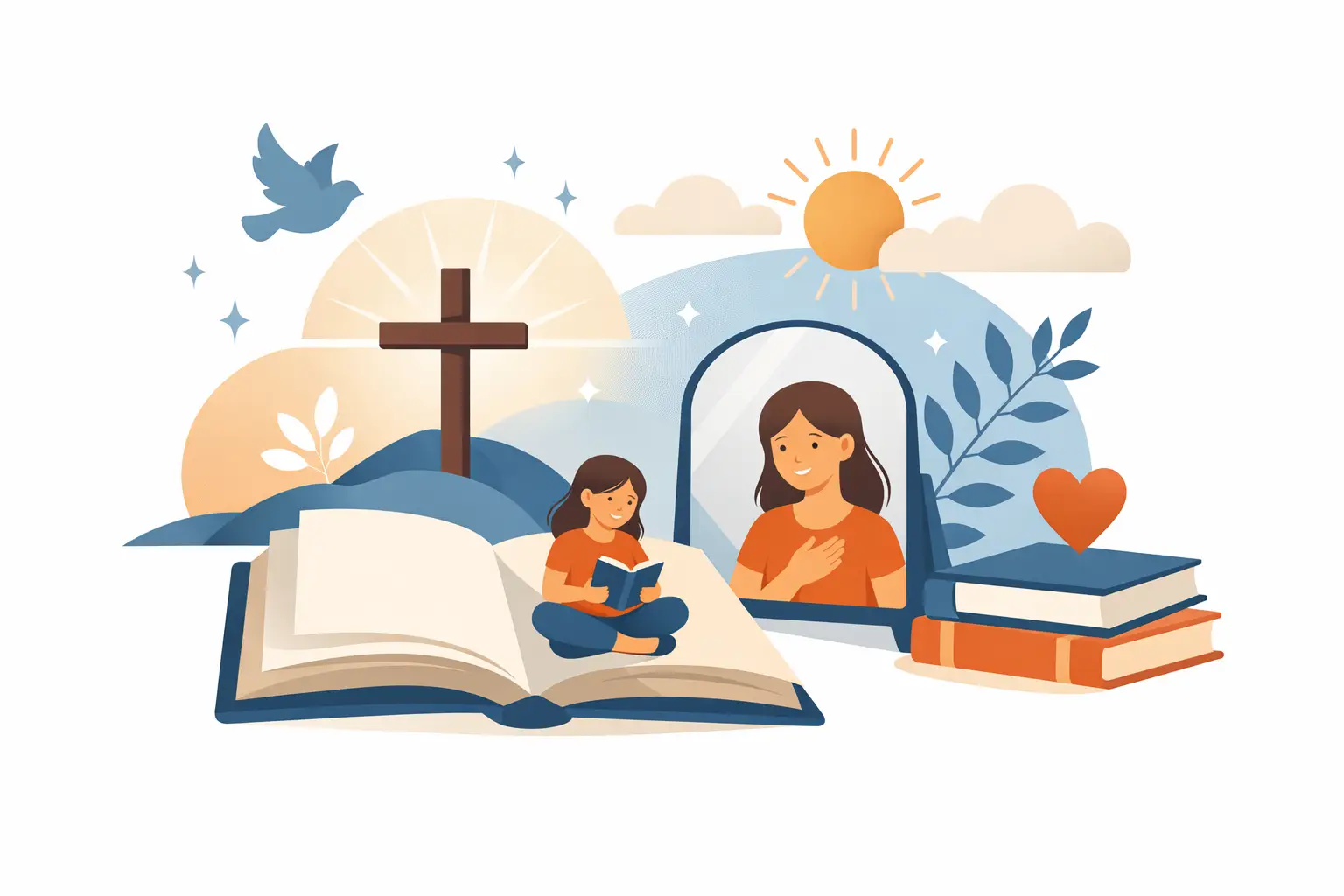
Some messages reach the heart faster through a story than through a lecture. A child may nod through a lesson about confidence, and a woman may repeat a verse about identity, yet both can still quietly wrestle with the question, Am I enough? That is why christian story books about self worth matter so deeply. They do more than entertain. They place truth in the hands of readers who need to feel, not just hear, that their value is secure in God.
For many families, self-worth is not a small issue tucked into a school year or a hard season. It shows up when a child compares herself to classmates, when a teen starts shrinking to fit in, when a mother feels invisible in the middle of serving everyone else, and when a woman carries old wounds that still whisper she is not lovable, chosen, or seen. Christian storytelling can meet those moments with gentleness. It gives the reader a mirror that reflects not the world’s approval, but God’s heart.
What makes christian story books about self worth different
Not every book about confidence is really about worth. Some books teach children and adults to believe in themselves, speak positively, or celebrate their uniqueness. Those ideas can be helpful, but Christian story books about self worth go deeper. They remind the reader that worth is not earned by performance, popularity, beauty, or success. It is rooted in being created on purpose by God and loved by Him.
That difference matters. If a child’s value rises and falls with grades, friendships, or talents, her confidence will always feel shaky. If a woman builds her identity only on how well she mothers, leads, serves, or holds life together, she will eventually feel exhausted and empty. A faith-filled story can gently shift the foundation. It tells the truth that we are precious because God says so, even when life feels messy.
The best of these stories do not sound preachy. They carry biblical truth in a way that feels warm, relatable, and honest. They make room for tears, questions, insecurity, and healing. They show a character struggling, learning, and remembering who they are in God’s eyes.
Why stories help truth settle into the soul
There is something tender and powerful about seeing a character face the same ache you have felt. A little girl who worries she is not as pretty or smart as others may not know how to explain those feelings. But when she hears a story about someone who feels left out, overlooked, or unsure, her heart begins to open. She can receive comfort without feeling exposed.
The same is true for women. Sometimes the pain around self-worth is layered. It may be connected to childhood rejection, divorce, betrayal, shame, comparison, or simply years of putting herself last. A story creates room to breathe. It can speak to hidden places with grace. Instead of directly confronting a wound, it can walk beside it.
Stories also help truth stay with us. A sentence in a devotional may encourage us for a morning, but a memorable character and a meaningful journey often remain in our hearts much longer. We remember scenes, words, and turning points. We remember how hope felt. That is part of the ministry of storytelling.
What to look for in a Christian story book about self worth
If you are choosing a book for your child, yourself, or someone you love, it helps to be discerning. Not every faith-based book handles self-worth with the same depth. Some are sweet but shallow. Others are biblical but emotionally distant. The most meaningful books hold both truth and tenderness.
Look for stories that clearly anchor identity in God rather than in achievement. Look for language that is age-appropriate but not watered down. A strong book should affirm the reader while also guiding them toward spiritual truth. It should not simply say, You are amazing just because. It should say, You are loved, seen, and created with purpose by the One who made you.
It also helps to notice whether the book speaks honestly about struggle. Real encouragement does not pretend pain is not there. A child may need a story that gently addresses bullying, feeling different, or fear of not measuring up. A woman may need a story that honors grief, disappointment, or the long process of healing. Books that skip over real emotions can feel thin. Books that acknowledge them with grace tend to stay with us.
For children, self-worth starts with identity
Children are forming their sense of self earlier than many adults realize. They pick up on who gets praised, who gets attention, what the culture celebrates, and how easily comparison slips into everyday life. That is why books matter so much in the early years. They can plant truth before lies grow roots.
A strong Christian story for children should help them understand that they are not accidents, afterthoughts, or less valuable than others. It should remind them that God made them with intention. It should show that kindness, courage, obedience, and compassion matter more than appearance or applause.
Stories like these can be especially meaningful at bedtime, after a rough school day, or during seasons when a child seems more sensitive than usual. Parents often look for practical tools, and books are one of the gentlest tools we have. They open conversations naturally. After reading, a mother can ask, Have you ever felt like that character? What do you think God would say to you in that moment? Those small conversations can shape a child’s inner life in lasting ways.
Women need these stories too
Sometimes Christian books about self-worth are treated as something mainly for children, but grown women need this message just as much. Many women know Scripture and still struggle to live from a place of beloved identity. They may encourage everyone around them while privately battling insecurity, disappointment, and the fear that they do not matter unless they are useful.
Story-based encouragement speaks to that weariness in a personal way. A woman may see herself in a character who has been overlooked, misunderstood, or stretched thin. She may find comfort in a journey that reflects her own prayers, doubts, and rebuilding. That does not replace the Bible, of course, but it can support the heart in receiving biblical truth more deeply.
This is where ministry-centered storytelling has such beauty. It does not only inform. It nurtures. It reminds women that God still speaks in the middle of ordinary life, unfinished healing, and hard chapters. For readers drawn to compassionate, faith-filled encouragement, even one well-written story can become a steady companion in a season of restoration.
The quiet power of reading together
One of the sweetest ways these books work is through shared reading. A mother reading with her daughter is doing more than passing time. She is building a language of identity in the home. She is helping her child connect comfort, truth, and God’s love in one moment.
The same can happen in women’s groups, homeschooling spaces, church circles, and family ministry settings. A story can become the starting point for prayer, conversation, and healing. It is often easier to discuss a character’s struggle before speaking about our own. That is not avoidance. It is grace making room for honesty.
If you are choosing books for a child, take your time. If you are choosing one for yourself, give yourself the same care. Sometimes the right book meets a need you could not fully name. SeedsofFaithByNaniBee reflects that kind of heart-centered encouragement, offering stories that speak to identity, healing, and purpose with warmth and conviction.
Choosing books that leave readers rooted, not just inspired
There is a difference between a story that feels good for a moment and one that leaves a reader more grounded in truth. The first may lift emotions briefly. The second helps renew the mind and steady the heart. When you are looking for Christian books centered on self-worth, that distinction is worth paying attention to.
Ask whether the story points readers back to God’s character. Ask whether it offers hope without pretending life is easy. Ask whether the message is memorable enough to carry into real moments of doubt. The right story does not have to be flashy. It just needs to be honest, faith-filled, and full of grace.
Some seasons call for bold reminders. Others call for tender ones. Either way, a good Christian story can whisper what a weary heart needs most: you are loved, you are seen, and your worth did not begin with human approval, so it cannot end there. Hold onto books that tell that truth well, because sometimes a story is how healing first begins.
Leave a Reply