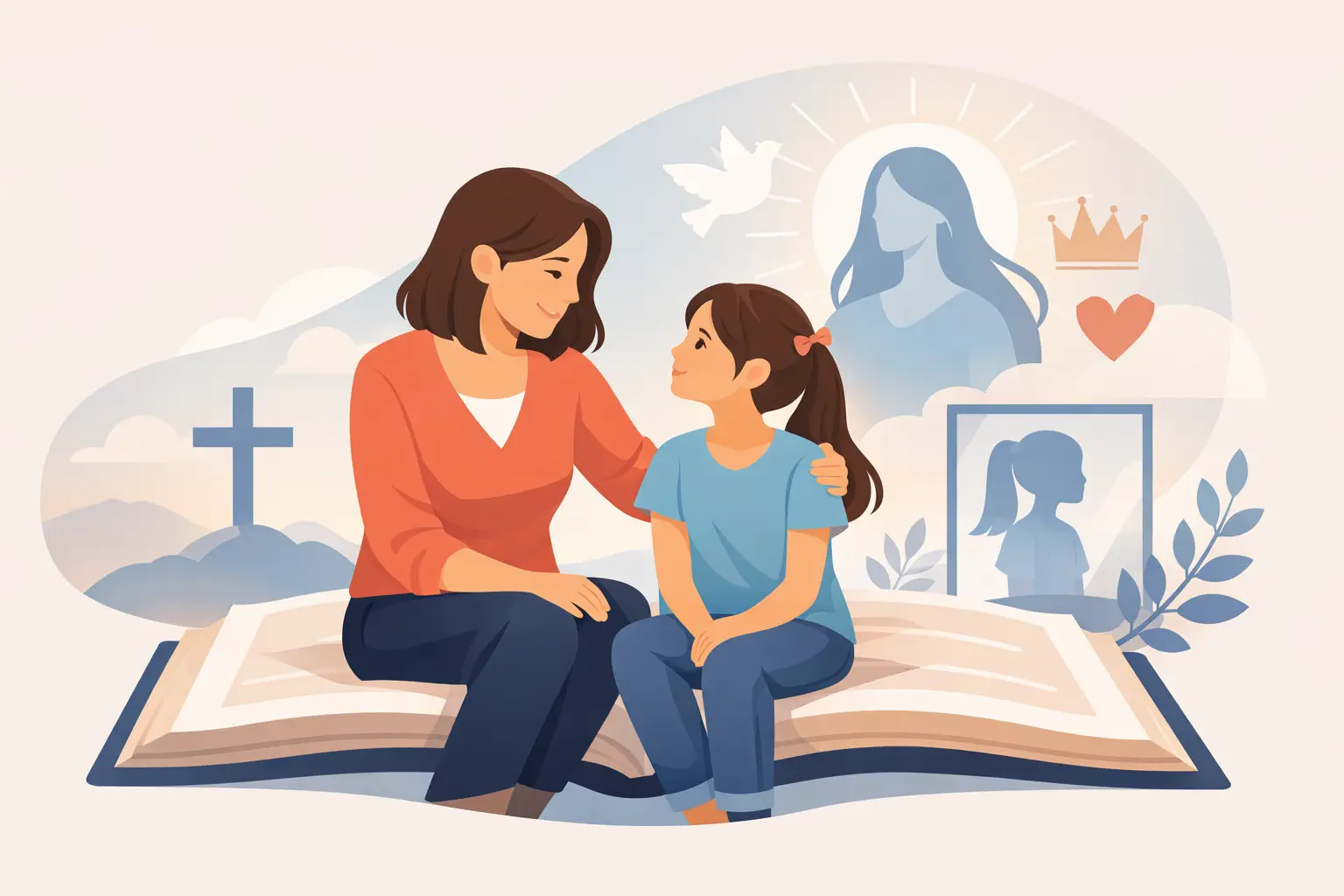
A girl can smile in church, do well in school, and still quietly wonder, Who am I really? That is why learning how to teach girls biblical identity matters so deeply. If we do not help them anchor their hearts in what God says, the world will gladly hand them a louder story.
For many girls, identity questions begin early. They notice who gets praised, who gets left out, who looks a certain way, who seems confident, who gets picked first, and who gets ignored. They absorb messages long before they know how to challenge them. A mother, mentor, teacher, auntie, or ministry leader has a holy opportunity here – not to raise a girl who simply behaves well, but to nurture a girl who knows she belongs to God.
Why biblical identity must start with belonging
Before a girl needs a polished answer about purpose, she needs security. Biblical identity is not first about performance. It is about relationship. She is loved by God, created on purpose, and seen in full. That truth steadies a child in a way compliments never can.
When girls only hear, Be kind, try hard, make good choices, they may begin to believe their worth rises and falls with behavior. Of course character matters. Scripture calls us to holiness. But if identity is built only on conduct, then failure becomes crushing. A girl who stumbles may start to think, I did something wrong, so maybe I am something wrong.
That is why we begin with what does not change. She is made in the image of God. She is not an accident. She is precious to Him. If she has trusted in Christ, she is His daughter. Even if she is still learning what faith means personally, she can be taught that the Lord knows her, values her, and invites her near.
How to teach girls biblical identity in everyday life
The strongest teaching usually does not happen in one big talk. It happens in little moments that repeat truth over time. A rushed morning can still hold a sentence of life. Bedtime can become a place of blessing. A hard conversation after school can become a doorway to discipleship.
Start by using simple, clear language. Tell her, You are loved by God. You were created with purpose. You do not have to earn His attention. Your beauty is deeper than appearance. Your voice matters, and your character matters too. Younger girls need these truths stated plainly. Older girls need them repeated in ways that connect to real pressures.
This is where many caring adults get discouraged. They say the right things, yet the girl still struggles with comparison, insecurity, or people-pleasing. That does not mean the teaching is failing. It means the battle over identity is real. We plant truth faithfully, and God grows roots we cannot always see right away.
Teach identity through Scripture, not slogans alone
Encouraging phrases can help, but biblical identity must be tied to God’s Word. Otherwise it can turn into positive thinking with Christian decoration on top. Girls need to know not just that they are special, but why. They need to see that truth comes from the Lord Himself.
You do not need to overwhelm them with long studies. Choose a few anchor passages and return to them often. Read them slowly. Ask what they show about God, and then ask what they reveal about who she is in Him. Help her notice that Scripture speaks to fear, worth, beauty, courage, and belonging.
It also helps to make room for questions. Some girls will openly ask, Why did God make me like this? Others will not say it out loud, but they feel it. Welcome the question without shaming it. Biblical identity grows stronger when girls learn that honest questions can be brought into the light.
Connect identity to real struggles girls face
If teaching stays abstract, it will not hold when life gets personal. A girl needs help applying truth when a friend excludes her, when she compares her body, when she feels awkward, when she fails, or when she feels unseen.
Say it gently and directly. If no one picks you first, that does not change your worth. If someone is mean to you, that does not define who you are. If you made a mistake, God can correct you without rejecting you. If you do not look like someone else, you were never called to become someone else.
This is one of the tender balances in how to teach girls biblical identity. We do not want to dismiss pain by answering too quickly. Sometimes a girl needs comfort before correction. She may need to cry first, then pray, then revisit truth. Ministry to the heart is rarely rushed.
Model the identity you want them to learn
Girls pay attention to what the women around them believe about themselves. If we constantly criticize our bodies, chase approval, or speak as though our worth depends on being needed by everyone, they notice. Even when our intentions are good, our habits preach.
That can feel heavy, but it can also be healing. You do not need to model perfection. In fact, honesty often teaches more. Let a girl hear you say, I was tempted to compare myself today, but I had to remind my heart what God says. Let her see repentance, humility, and confidence rooted in the Lord.
This is especially important for Christian mothers and caregivers. Home is often where identity gets reinforced or weakened. Praise effort, kindness, wisdom, and faithfulness, not just appearance or achievement. Celebrate who she is becoming in Christ, not merely how well she is performing.
Use correction that protects identity
Girls need guidance. Sin is real, and discipline matters. But correction should aim at the heart without attacking the child’s personhood. There is a difference between saying, That choice was unkind, and saying, You are just mean. One calls behavior into alignment. The other can harden shame.
Biblical identity does not remove accountability. It gives accountability a redemptive frame. We correct because she is called to walk in truth, not because she must prove she is worthy of love. Grace and standards belong together.
Create rhythms that remind her who she is
Children remember what is repeated. Small spiritual rhythms can shape a girl’s inner world over time. Pray identity over her. Speak blessing before school. Keep a verse where she can see it. Ask heart-level questions at dinner or bedtime. Let faith become part of the air she breathes, not just the subject she hears at church.
Stories can help too. Girls often receive truth more deeply when they see it lived out. Testimony, Scripture narratives, and faith-filled books can place courage, healing, and godly character in language they understand. That is one reason ministry-centered storytelling reaches the heart so powerfully. It gives truth a face and a feeling.
Still, every girl is different. Some respond quickly to conversation. Others need journaling, art, routine, or quiet prayer. Some are tender and anxious. Others seem bold but still carry hidden insecurity. Teaching biblical identity is not one-size-fits-all. The message stays the same, but the approach may need to bend with wisdom.
When a girl does not believe the truth yet
There may be seasons when she hears truth and resists it. She may say, I know God loves me, but I still feel ugly. I know I matter, but I still feel left out. Those moments are not proof that she is failing spiritually. They are invitations to patience.
Keep showing up. Keep speaking life. Keep opening Scripture. Keep praying when your words seem to land softly. A girl may borrow your faith language before she fully owns it, and that is all right. We all learn by hearing truth again and again until it sinks beneath the surface.
If you are looking for how to teach girls biblical identity, remember this: your role is not to force instant confidence. Your role is to faithfully point her back to God, again and again, with truth wrapped in tenderness. Over time, what was once repeated by others can become something she believes for herself.
And when she does, it will not make her proud or self-centered. It will make her steadier. A girl who knows she is God’s can walk through hard days without losing herself so easily. She can grow in wisdom, humility, and courage. She can become the kind of young woman who shines with quiet strength, not because the world crowned her, but because she knows whose she is.
So speak life over the girls in your care. Tell them the truth when they are joyful, and tell them again when they are hurting. The seeds you plant in faith today may become the very words they whisper back to their own hearts tomorrow.
Leave a Reply